Introduction
AI-augmented software development is no longer experimental — it’s becoming a competitive advantage. Companies are increasingly combining senior engineering talent with AI coding tools to accelerate delivery, reduce repetitive work, and improve code quality without expanding headcount at the same rate.
Rather than replacing developers, AI enhances their productivity. The result is faster iterations, shorter release cycles, and better alignment between product and engineering teams.
This guide explains how AI-augmented development services work, why companies are adopting them, and how to evaluate providers before committing.
What AI-Augmented Development Is
AI-augmented development refers to software engineering workflows enhanced by artificial intelligence tools such as documentation and code reviews are partially automated. This shift requires a clear understanding of staff aug vs managed services to decide how much operational control your team should retain.
In practice, this means:
- Developers use AI copilots to accelerate coding tasks
- Infrastructure is automated through AI-assisted DevOps pipelines
- Testing cycles are shortened using AI-generated test cases
- Documentation and code reviews are partially automated
The key difference is that AI operates under the supervision of experienced engineers. Productivity increases, but architectural decisions, security controls, and product logic remain in human hands. Maintaining this human-centric oversight is a core principle of responsible AI development frameworks, ensuring that automated suggestions align with architectural integrity.
Why Companies Use AI-Augmented Teams
- Faster time-to-market
AI-assisted coding reduces boilerplate and repetitive tasks, allowing teams to focus on architecture and product differentiation. - Higher engineering velocity without proportional hiring
Instead of doubling headcount, companies increase output per engineer. Many firms are achieving this by focusing on nearshore software development in Mexico to find senior talent ready for AI integration. - Improved code quality
AI tools help detect errors early, suggest optimizations, and standardize formatting. These improvements help teams align with international software quality models that prioritize maintainability and functional suitability. - Better DevOps automation
AI enhances CI/CD pipelines, infrastructure provisioning, and monitoring workflows. - Competitive advantage through speed + quality
In fast-moving markets, combining AI acceleration with experienced engineering talent often determines long-term product viability.
Service Models & Evaluation Criteria
Not all AI-augmented development providers operate the same way. Differences usually fall into two main categories: Embedded AI-Enhanced Staff Augmentation, where senior engineers integrate directly into your team and leverage AI tools within your existing workflows to maintain operational control and long-term knowledge continuity; and AI-First Development Agencies, which combine proprietary AI toolchains with project-based delivery models, managing end-to-end development while embedding automation, code generation, and AI-powered testing into their internal processes.
Dedicated AI Pods
Small teams of engineers, DevOps specialists, and AI experts working as an autonomous unit.
When evaluating providers, consider:
1. Seniority of Engineers
AI amplifies productivity — but only if the underlying engineers are experienced. Junior talent relying heavily on AI may introduce architectural risks.
2. AI Tool Integration Strategy
Does the provider use industry-standard tools, proprietary systems, or client-approved environments?
3. Security & Code Governance
AI-generated code must still comply with internal security standards and review processes. It is critical to ensure that AI-assisted workflows do not overlook critical web application security risks during the rapid generation of code.
4. Integration Model
Are engineers embedded in your daily ceremonies? Do they participate in sprint planning and architectural discussions?
5. Transparency & Cost Structure
Understand how pricing reflects talent compensation versus AI tooling overhead.
Top Companies Offering AI-Augmented Software Development Services
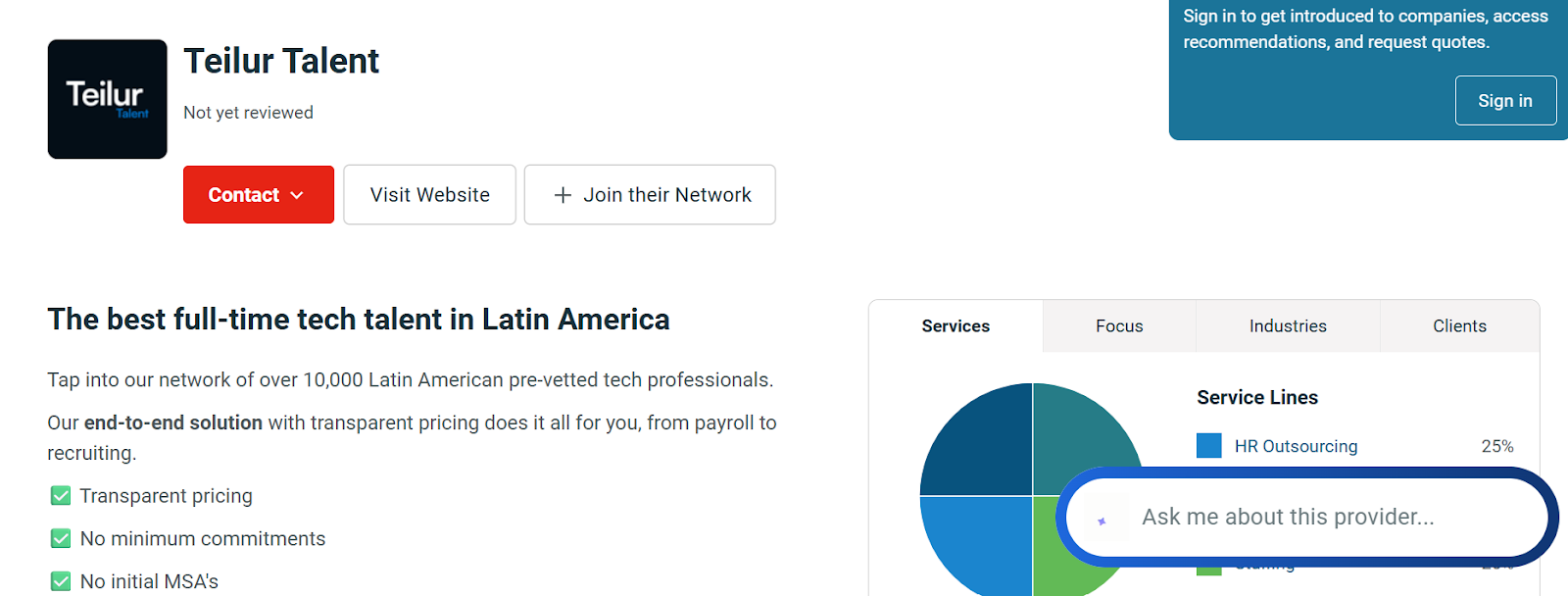
1. Teilur Talent
Focus: AI-Enhanced Staff Augmentation with radical transparency.
Teilur Talent has evolved its staff augmentation model to ensure that senior engineers not only write high-quality code, but also strategically leverage AI tools to improve productivity. Rather than replacing engineering judgment, AI is used to accelerate repetitive tasks — such as documentation, refactoring, and test generation — while senior developers maintain architectural control and long-term product ownership.
What differentiates it:
Teilur’s transparent rate pricing model ensures that the majority of the client’s budget goes directly to the engineer. This creates strong motivation, long-term retention, and continuous upskilling in generative AI tools. The productivity gains from AI are reflected in product quality and delivery velocity — not absorbed as hidden agency margin. This alignment is the core of our transparent rate pricing, which ensures that productivity gains directly benefit the product and the developer.
2. Azumo
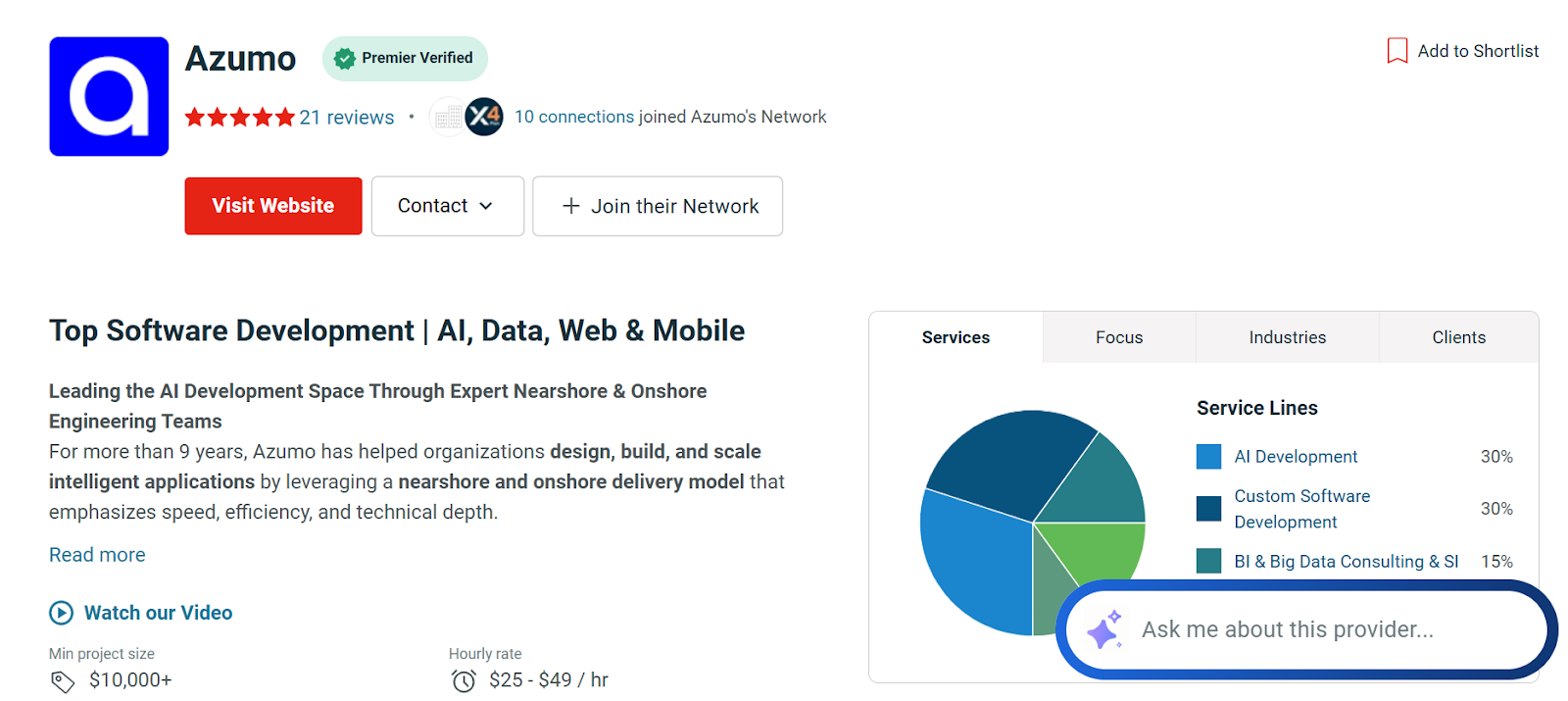
Focus: AI-First Software Development.
Azumo is recognized for its deep expertise in AI and machine learning. Beyond traditional development, the company supports clients in building applications that integrate intelligent AI agents and automation-driven workflows. Their teams combine agile methodologies with AI-enabled engineering practices to reduce delivery cycles.
What differentiates it:
Azumo has positioned itself as a pioneer in generative AI solutions for the U.S. enterprise market, balancing traditional software engineering discipline with advanced artificial intelligence capabilities.
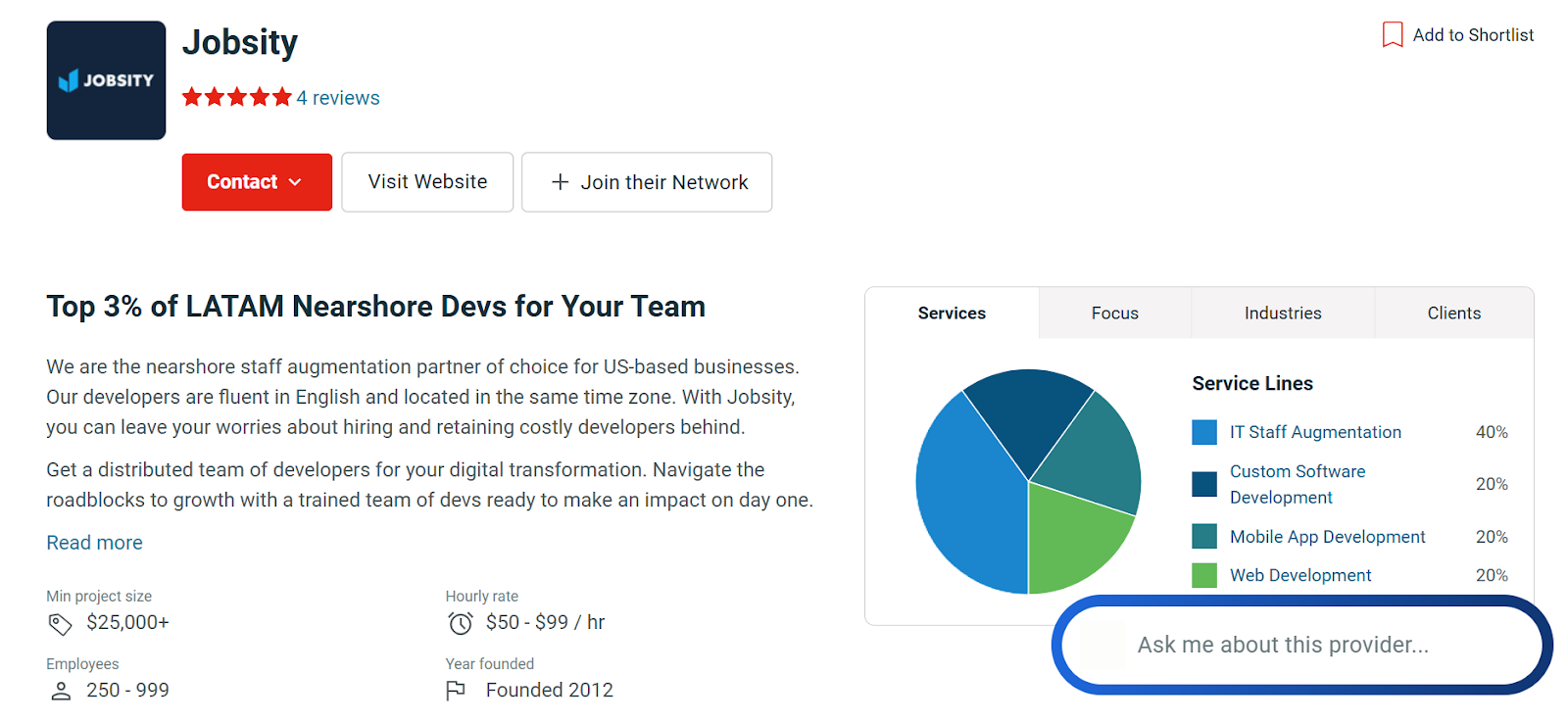
3. Jobsity
Focus: Collaborative Nearshore Teams with AI integration.
Jobsity emphasizes collaborative, nearshore engineering teams that operate in high-velocity environments. Their developers are trained to incorporate AI tools into daily workflows — particularly for improving automated test coverage, documentation consistency, and sprint predictability.
What differentiates it:
Their selection process evaluates not only technical skill, but also a developer’s ability to work effectively with AI-powered coding assistants and automation platforms — ensuring consistent, sprint-based delivery improvements.
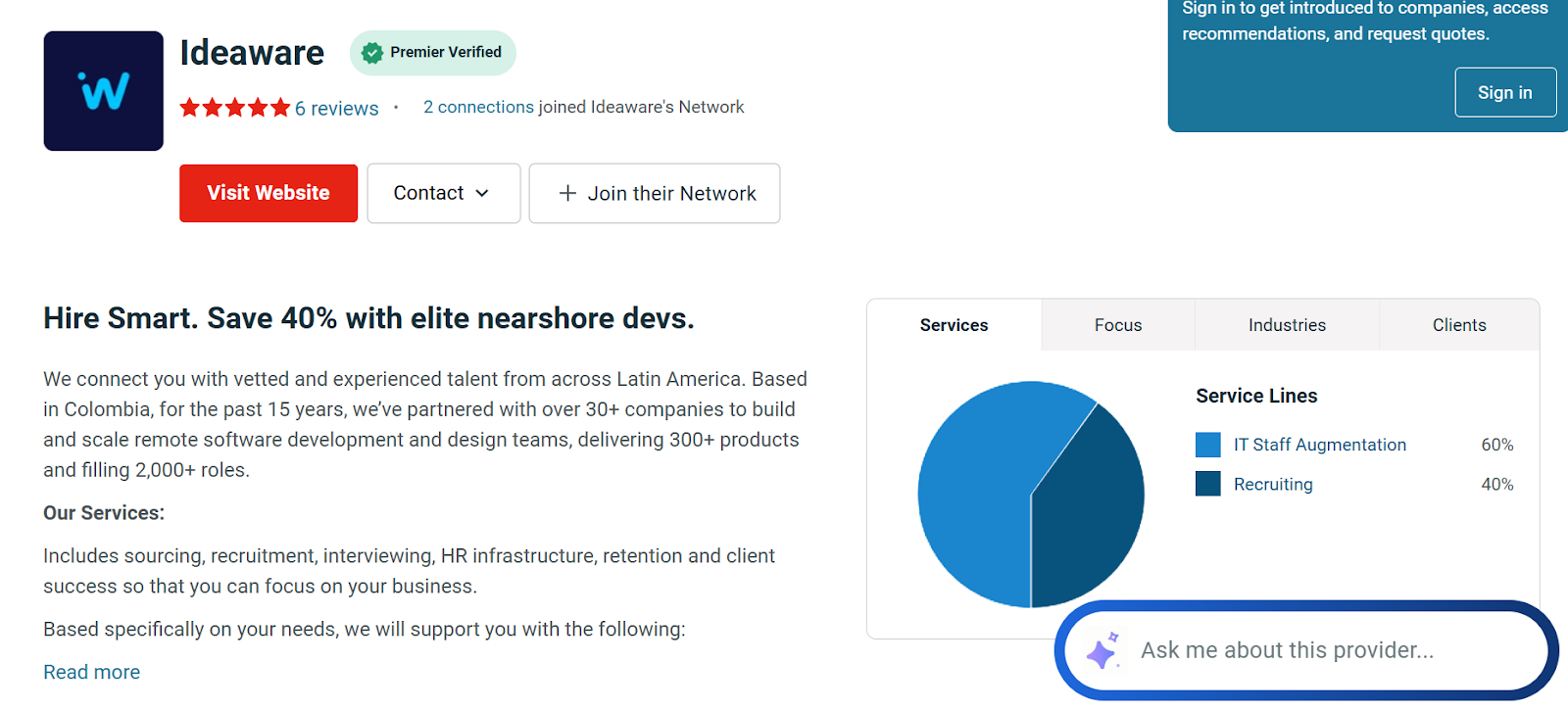
4. Ideaware
Focus: Boutique Agile Development and AI-Enhanced Product Design.
Ideaware combines UX design expertise with engineering execution, leveraging AI tools to accelerate prototyping and optimize code in real time. This approach helps startups reduce time-to-market while maintaining product quality and agile flexibility.
What differentiates it:
Their 30-day risk-free guarantee extends to AI-augmented developers, allowing startups to validate both technical and cultural fit before committing long term.
Pricing & Scalability
AI-augmented development services typically follow one of these pricing models:
- Monthly embedded staff augmentation
- Project-based delivery
- Dedicated team pods
- Usage-adjusted hybrid models
Pricing varies based on:
- Engineer seniority
- AI tooling complexity
- Infrastructure scale
- Security requirements
For growth-stage companies, the key advantage of AI-augmented services is scalability. Teams can increase output without multiplying fixed costs — especially when engineers are embedded long term rather than rotated frequently. When budgeting, it is essential to review the costs to hire developers in LATAM to optimize your engineering spend.
FAQ
Does AI-augmented development replace human engineers?
No. AI increases productivity, but architecture, security decisions, and product ownership still depend on senior engineers. Models that embed experienced developers directly into your workflows — such as AI-enhanced staff augmentation structures — typically ensure that AI acts as a productivity layer, not a replacement for engineering judgment.
Is AI-generated code secure enough for production?
It can be — when governed by structured review processes. Providers that prioritize senior-level talent and long-term integration, rather than short-term project outsourcing, tend to produce more stable and secure results because engineers remain accountable for code quality over time. Security is maintained through automated software development controls that verify every line of code before it reaches production.
How quickly can companies onboard AI-augmented developers?
Timelines vary, but strong nearshore partners can present pre-vetted senior engineers within days while maintaining both technical and cultural screening standards. For example, embedded models that combine transparent pricing with rigorous vetting often balance speed and long-term fit more effectively than volume-based marketplaces.
Conclusion
AI-augmented development services represent the next evolution of software outsourcing. Companies that combine senior engineering talent with structured AI workflows gain measurable advantages in speed, efficiency, and scalability.
The key is choosing a partner that prioritizes senior expertise, operational integration, and transparency. Explore our guide on the best nearshoring companies for startups to find the right partner for your AI-enhanced roadmap.
In the next section, we’ll compare the leading companies offering AI-augmented software development services and how their models differ in practice.
Looking to build your remote team in Latin America without hidden fees or inflated markups?
At Teilur Talent, our Transparent Rate Pricing model ensures you know exactly where every dollar goes — with at least 80% of the rate going directly to the talent. This means fair pay, full visibility, and stronger long-term partnerships that drive real growth. We connect you with vetted, English-proficient professionals in tech, marketing and business ops who are ready to scale your operations seamlessly and cost-effectively.
If you’re ready to experience a smarter way to hire, click here to schedule a free consultation with us.